Prof. Ying Jiang and Prof. En-Ge Wang from Peking University Solved the Structural Puzzle of Nanoconfined Water
Recently, Ying Jiang, Ke Bian, and En-Ge Wang from the International Center for Quantum Materials and Interdisciplinary Institute of Light-Element Quantum Materials at Peking University, in collaboration with Xiao Cheng Zeng from the City University of Hong Kong, originally developed a scanning quantum sensing microscop to, for the first time, observe the liquid–solid phase transition of nanoconfined water at room temperature. This study resolves the structural puzzle of nanoconfined water, providing a unified physical picture for understanding the origins of its various anomalous properties. This work, titled “Experimental observation of liquid–solid transition of nanoconfined water at ambient temperature”, was published in Nature Materials on January 12th, 2026. The reviewers highly praised this work, noting that it addresses "a long-standing open question regarding water’s behavior under nanoconfinement."
Nanoconfined water refers to water confined within nanosized cavities. When the confinement dimensions shrink to a few nanometers or even sub-nanometers, its physical and chemical properties deviate significantly from the macroscopic bulk-phase water. Examples include ultrafast transport, ultralow dielectric constant, ultralong relaxation times, and ferroelectric behavior. However, the microscopic origins of these anomalous properties have long been debated, largely due to the lack of experimental methods capable of characterizing the structure and dynamics of nanoconfined water.
"What is the structure of water?" and "How can we measure interface phenomena on the microscopic level?" were identified as two of the pivotal scientific questions posed by Science in 2005 and 2021, respectively. Research on the structure of nanoconfined water lies at the core of both these challenges, making it a highly demanding and cutting-edge topic. To address this, Ying Jiang's group at Peking University has led to the development of a novel scanning quantum sensing microscope by combining qPlus-type scanning probe microscopy (qPlus-SPM) with nitrogen-vacancy (NV) center-based quantum sensing. This innovation overcomes the sensitivity limitations of conventional SPM techniques, enabling, for the first time, the observation of liquid–solid phase transitions of nanoconfined water at the molecular level.
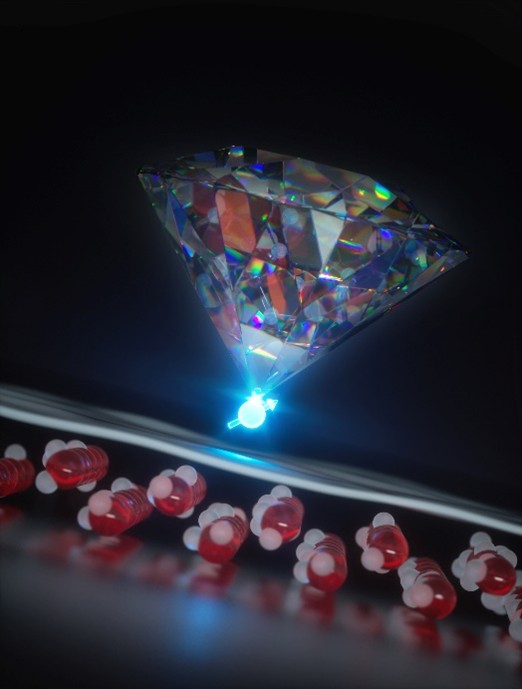
Figure 1: The schematics of the experiments.
The research team constructed the 2-dimensional nanoconfined water by transferring a hexagonal boron nitride flake onto a hydrophilic diamond surface, where the confinement size could be finely tuned (Figure 1). They applied qPlus-SPM to precisely measure the confinement size, while using NV center-based nuclear magnetic resonance spectroscopy to probe the structure and dynamics of the confined water. The experimental results (Figure 2) show that when the confinement size is reduced below 1.6 nm, the diffusion of water molecules is significantly suppressed, where its hydrogen-bonding network becomes ordered, forming a "solid-like" structure that is intermediate between solid and liquid. When the confinement size is further reduced below 1 nm, the confined water completely transforms into a complete crystallization at room temperature. These experimental findings are also supported by molecular dynamics simulations.
This study systematically reveals the unique structures and dynamic behaviors of water under extreme confinements, providing a unified physical picture for understanding the origins of its various anomalous properties. Furthermore, these results successfully resolve the long-standing debates in nanofluidics, indicating that fluids in nanochannels are no longer simple liquid flows, which might behave as "solid-like" frictionless transport (i.e., superlubricity). Such a breakthrough paves the way for transformative technology advancements in various fields like seawater desalination, water harvesting, nanofiltration, and energy harvesting.
Both the scientific discoveries and experimental techniques of this work were highly praised by all three reviewers: "These findings significantly address a long-standing open question regarding water’s behavior under nanoconfinement", "This experiment answers many fundamental questions about how water behaves on the nanoscale. It certainly holds scientific merit and focuses on a topic of interest for fundamental interdisciplinary research and applications", and "The integration of scanning probe and NV-based nanoscale spectroscopy under ambient conditions is particularly innovative and is likely to have a substantial impact across diverse fields, including nanofluidics, quantum sensing, and materials science".
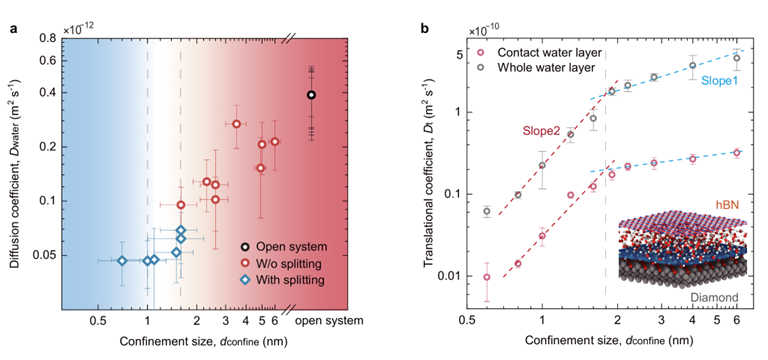
Figure 2: The liquid-solid phase transitions of nanoconfined water.
Ying Jiang, Ke Bian, En-Ge Wang, and Xiao Cheng Zeng are the corresponding authors. Wentian Zheng, Shichen Zhang, and Jian Jiang are the co-first authors. This work was financially supported by the National Natural Science Foundation of China, the Ministry of Science and Technology, New Cornerstone Science Foundation, Beijing Outstanding Young Scientist Program, and the Beijing Municipal Science & Technology Commission.
Link to this paper: https://www.nature.com/articles/s41563-025-02456-8